Hello! Hope everyone’s having a good month so far. It’s still cold in February but definitely better than January as the days are now longer so I get to see more sunlight.
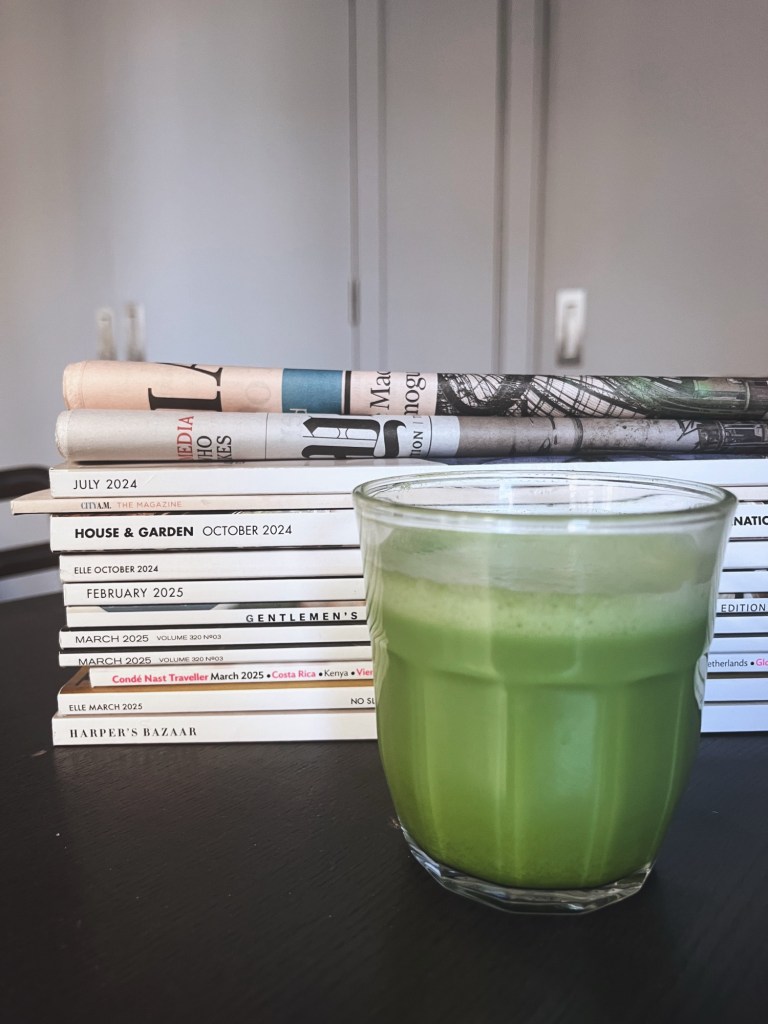
As I mentioned in my last post, it’s been weeks since I started to have matcha latte in my daily routine. I’m still learning about all things matcha and am keen to learn & hear more from the experts. The reason I started to consume matcha is actually after learning about its benefits to our bodies.
I’ll share a couple of things I learned about matcha and let me know if anything is wrong as I’m still a newbie in this space.
1. Matcha literally means “powdered (green) tea” in Japanese. It is made of tea leaves grown under shade for a few weeks before it’s harvested. Now, it is called “matcha” when it’s ground into powder.2. Matcha still contains caffeine, but less than a coffee. Because of the technique, grown under the shade, matcha contains L-Theanine, an amino acid that works in synergy with caffeine to promote relaxation and helps provide a steady energy boost without the jitters. Meanwhile, coffee provides an immediate caffeine spike. Now it makes sense to me why some people can’t have coffee as it makes them jittery.3. Matcha comes in different grades, depending on harvest time, growing technique, and processing which affect its taste and quality. At first, I didn’t understand this “grade” thing in matcha. But based on what I read, to make it easier, in general, there are two types of grades: (1) Ceremonial Grade, which is usually used in Japanese tea ceremony and harvested in spring (known as “first harvest”), hence is considered a higher grade, and (2) Culinary Grade, which is usually used in baking or cooking. Then, we might find different “categories” for each grade depending on the growing method, such as Organic Ceremonial Grade, etc.4. Ceremonial grade matcha usually comes in a vibrant green colour which indicates freshness and high chlorophyll content, and hence considered a higher quality and provides better taste. Meanwhile, non-ceremonial grade matcha may have a dull green colour which indicates oxidation or lower qualities, and hence can taste bitter. After learning about this thing, now I realise I think I used lower matcha quality to my basque matcha cheesecake that I used to make last year as the colour is definitely not vibrant green haha!5. Matcha is rich in antioxidants, higher than coffee and even green tea, which obviously are beneficial to our body!
Right. That’s all for now! As always, will try to post more. Have a great day!
thank you for sharing about matcha! I’d probably try to have it more than coffee. Also, those photos are so lovely, especially the matcha basque cheese cake ❤️




 MONICADEA.COM
Leave a reply to 2/12 2025 February Recap – MONICADEA.COM Cancel reply